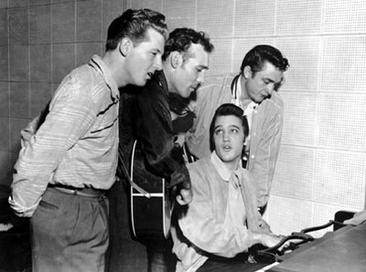
The night of December 4, 1956, at Sun Studio in Memphis, Tennessee, wasn't just another recording session; it was a cosmic alignment of musical titans. Imagine stepping back in time to witness rock and roll's Mount Rushmore—Elvis Presley, Johnny Cash, Carl Perkins, and Jerry Lee Lewis—jamming together in an impromptu session. This legendary moment, captured in a single iconic photograph and on tape, forms the bedrock of one of theatre's most electrifying productions: Million Dollar Quartet. For years, Chicago has been a vital stage for this show, continuously bringing the raw energy and captivating history of these music legends to life, particularly highlighting the undeniable charisma and piano prowess of Jerry Lee Lewis.
The "Million Dollar Quartet" isn't merely a tribute; it's a vibrant revival, a time capsule delivered with an explosive theatrical flair. For enthusiasts of early rock and roll, country, and rockabilly, or anyone curious about the genesis of modern music, this production offers an unparalleled journey. And for those seeking the authentic spirit of Jerry Lee Lewis in Chicago, the stage adaptation provides a thrilling, high-octane experience that feels as fresh and revolutionary today as the original jam session did over six decades ago.
The Genesis of a Legend: Sun Studio's Fateful Jam
The story begins with Carl Perkins, already a star with his hit "Blue Suede Shoes," in the studio for a recording session at Sam Phillips's Sun Records. Phillips, often hailed as "the father of rock and roll," had an uncanny knack for discovering talent and nurturing their unique sound. On this particular day, fate intervened in spectacular fashion. Elvis Presley, who had already moved on to RCA but still dropped by his old stomping grounds, stopped in. Soon after, Johnny Cash, another Sun artist, arrived. And then there was the audacious, piano-pounding newcomer, Jerry Lee Lewis, who was not only there to play piano for Perkins but also to audition for Phillips, desperately seeking a long-term contract.
What unfolded was a spontaneous, unscripted jam session—a moment of pure musical serendipity that Phillips wisely recorded. This wasn't a planned supergroup; it was a convergence of individual brilliance, each artist at a pivotal point in their career, creating a sound that would echo through generations. While some were contemplating leaving Sun, Lewis was eager to commit, demonstrating the ferocious energy that would soon earn him the moniker "The Killer." This single incident encapsulated the raw, revolutionary spirit of Sun Studio and the burgeoning genre of rock and roll.
"Million Dollar Quartet": A Chicago Stage Phenomenon
The magic of that Memphis night was eventually translated to the stage by Floyd Mutrux, who co-wrote the book with Colin Escott and directed the original productions. What started in Daytona Beach in 2006 and moved to Seattle in 2007, found its true theatrical footing and development in Chicago. The Goodman Theatre, a cornerstone of Chicago's vibrant theatre scene, helped shape the show in the fall of 2008, honing its narrative and musical prowess. From there, it transferred to the Apollo Theatre, where it enjoyed an impressive, lengthy run until early 2016, becoming a beloved staple of the city's entertainment landscape.
Chicago's embrace of Million Dollar Quartet cemented its place in theatrical history. Even as the original cast took the show to Broadway, winning a Tony Award for Levi Kreis's unforgettable portrayal of Jerry Lee Lewis, the Apollo continued its successful run. This parallel success underscores Chicago's critical role, not just as a venue, but as a crucible where major theatrical works are refined and celebrated. The show's periodic returns to Chicago venues like the Paramount Theatre continue to draw eager audiences, proving its enduring appeal and its special connection to the city.
Bringing the Icons to Life: Performances That Electrify
A "jukebox musical" relies heavily on its ability to recreate the sound and spirit of its source material, and Million Dollar Quartet excels thanks to its phenomenal cast. Each actor not only embodies their legendary counterpart but also channels the raw energy that defined these pioneers. For anyone seeking a genuine Jerry Lewis Chicago experience—referring, of course, to the explosive rock and roll icon Jerry *Lee* Lewis—the performances in this show are nothing short of breathtaking.
- Jerry Lee Lewis (Gavin Rohrer / Levi Kreis): The character of Jerry Lee Lewis is the show's undeniable live wire. Levi Kreis's Tony-winning performance set a high bar, and actors like Gavin Rohrer, who has portrayed Lewis in multiple productions, consistently meet it. Rohrer is often described as "incredible," mastering Lewis's unique brand of boogie-woogie piano and his signature wild-eyed, stage-straddling antics. His performance is a physical and musical tour de force, embodying the "Killer's" early ambition and electrifying showmanship. Witnessing Lewis's journey from eager newcomer to a force of nature is central to the show's appeal.
- Sam Phillips (Nicholas Harazin): The man orchestrating the chaos, Phillips is portrayed with a mix of visionary zeal and shrewd business acumen. Nicholas Harazin brings to life the "father of rock and roll," whose belief in these raw talents changed music forever.
- Johnny Cash (Bill Scott Sheets): Long-time fans of the "Man in Black" will not be disappointed. Bill Scott Sheets, an operatic baritone, not only nails Cash's distinctive deep voice but also his introspective stage presence and unique microphone approach, capturing the gravitas of the future legend.
- Carl Perkins (Adam Wesley Brown): Perkins, the rockabilly king and original writer of "Blue Suede Shoes," is depicted with a palpable sense of frustration and pride. Broadway actor Adam Wesley Brown, a veteran of Chicago theatre, captures Perkins's distinctive guitar style and his internal struggle with Elvis's appropriation of his biggest hit, complete with characteristic knee raises and emphatic movements.
- Elvis Presley (Kavan Hashemian): The King himself, Elvis Presley, is brought to life with charisma and authenticity. Kavan Hashemian, who has appeared in numerous Million Dollar Quartet productions, embodies Elvis's magnetic stage presence and vocal charm, making it easy to see why he was such an immediate sensation. His comfort in the role is evident, performing Elvis's hits with practiced ease and signature moves.
The meticulous attention to detail extends beyond the performances. Chicago set designer Kevin Depinet masterfully recreates Sam Phillips’s original Sun Records studio in Memphis, placing the audience right in the heart of that historic moment. The intimate setting enhances the feeling of being a fly on the wall, witnessing a pivotal chapter in music history unfold.
Beyond the Music: The Enduring Legacy in Chicago
The success of Million Dollar Quartet in Chicago isn't just about nostalgia; it's about the timeless appeal of these musical narratives and the power of live theatre to transport audiences. The show serves as an educational and entertaining portal, reminding us of the era when rock and roll was a rebellious, boundary-breaking force. It highlights the dreams, rivalries, and camaraderie of four young men who would become legends.
For audiences, the experience is immersive and electrifying. It’s an opportunity to hear classic songs performed with an authenticity and energy that only live theatre can provide. Whether you're a die-hard fan of the era or new to the story, the raw talent on stage and the historical significance of the event make for an unforgettable evening. The boogie piano of Jerry Lee Lewis, the booming voice of Johnny Cash, the rockabilly flair of Carl Perkins, and the undeniable magnetism of Elvis Presley converge in a dynamic performance that continuously revives the spirit of that momentous night.
It's important to note the distinction: while the focus here is on Jerry *Lee* Lewis and the rock and roll revival, Chicago also has connections to the celebrated comedian Jerry Lewis, known for his iconic partnership with Dean Martin and his prolific film career. For more on the life and legacy of the comedic legend, you can explore HollywoodChicago Remembers Jerry Lewis: Comedy Legend's Impact. However, when discussing Jerry Lewis Chicago in the context of the Million Dollar Quartet, we are firmly planted in the world of electrifying rock and roll and the unforgettable "Killer."
In essence, Million Dollar Quartet is more than just a musical; it's a vibrant, living piece of history. Chicago's ongoing engagement with this production ensures that the legacy of Sun Studio's most famous jam session continues to resonate, inspiring new generations with the timeless sound and stories of rock and roll's founding fathers, especially the incomparable Jerry Lee Lewis.